

Jewelry Laser Welding Machines
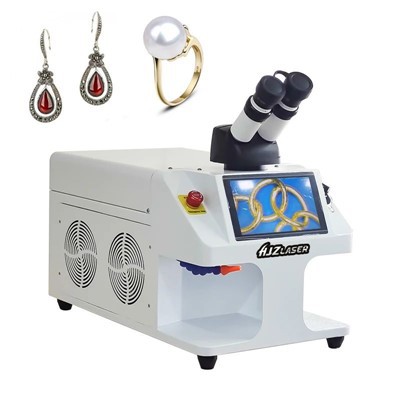
Jewelry laser welding machines provide high-precision welds for delicate jewelry pieces. Using concentrated laser beams, they join small metals without deformation or discoloration. Applications include ring, necklace, and watch repairs, as well as custom jewelry production, allowing artisans to maintain intricate designs.


Why Choose Us
Sales Market
Our machines have been exported to more than 160 countries around the world, including the United States, Germany, Italy, South Korea, Mexico, Peru, Brazil, Saudi Arabia, South Africa, and more.
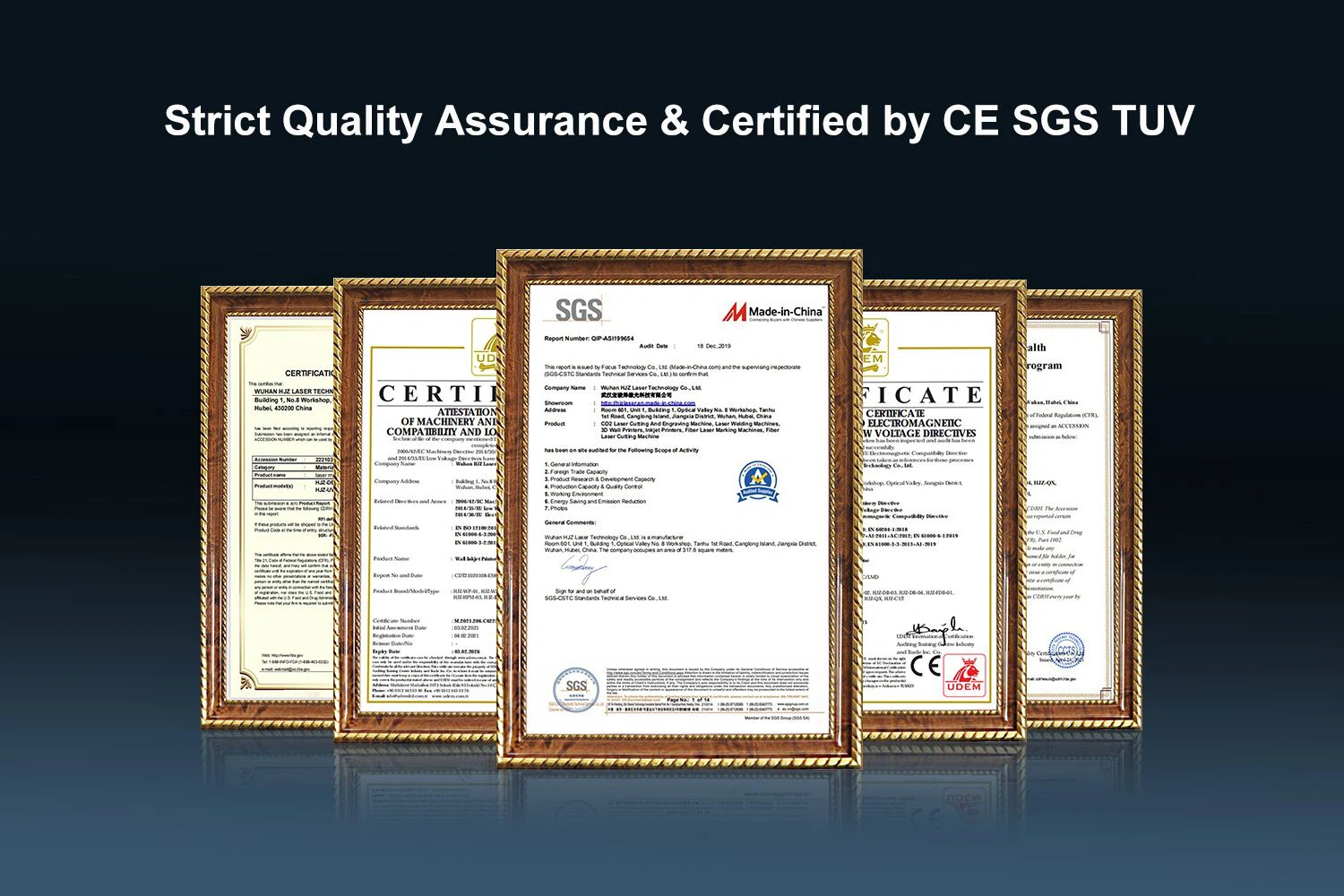
Certifications
HJZ Laser machines are CE, TUV, and SGS certified. We have also obtained patent certificates for our laser products.
Our Service
Before delivery, each machine is tested for 24 hours to ensure it is in perfect working condition.A user manual and training video are provided. Our laser machines are very easy to operate—after watching the training video, you'll be able to use the machine with ease.
Jewelry Laser Welding Machines
Jewelry laser welding machine can be used to fill porosity, re-tip platinum or gold prong settings, repair bezel settings, repair/resize rings and bracelets without removing stones and correct manufacturing defects. Laser welding reconfigures the molecular structure of either similar or dissimilar metals at the point of welding, allowing the two common alloys to become one.
Technical Parameters:
|
Max Laser power |
60W |
|
Laser type |
YAG |
|
Laser wavelength |
1064nm |
|
Pulse width |
0.5ms~15ms |
|
Pulse energy |
40J |
|
Pulse frequency |
1.0~10.0HZ Continuous Adjustable |
|
Pump Source |
Single Lamp |
|
Adjusting range of light spot |
0.2-3.0mm |
|
Operation Mode |
Touch Control |
|
Cooling system |
Built-in Water cooling |
|
Sighting positioning system |
CCD monitor system, Microscope |
|
Power Supply |
AC220V±15% /50Hz/25A (TN-C) |
|
Integrity power |
5.5KW |
|
Lifetime |
3,000,000 times |
|
Dimension |
Machine(63*52*54cm) |
|
N.W. |
36KG |
|
G.W |
42 kg |
Jewelry Laser Welder Details
Compact Portability:
Designed with a desktop footprint, this laser welder is both lightweight and space-saving, facilitating easy movement and storage within any workspace.
Durability & Reliability:
Featuring a long-lasting xenon lamp and ceramic cavity, the machine ensures stable performance tailored for continuous use. This is complemented by low maintenance costs, enhancing overall reliability.
Cost-Effectiveness & Safety:
An energy-saving design minimizes power consumption. Safety features include a protective gas system and an emergency stop button, ensuring secure operation.
Ergonomic Design:
The entire machine boasts an ergonomic design, supporting long-term continuous work without compromising performance.
Precision Welding:
Refined light points cater to the demands of precise welding, making this laser welder ideal for intricate jewelry applications.

Main features:
Whole machine adopted ergonomics design. It can better meet jewelry industry's requirements on precision, beautiful, stable performance, long time and constant processing.
With the LED ring-shaped astral lamp which can be highlighted and microscope imported from Germany, the observation on welding position is much clearer.
It is equipped with electric focusing mechanism, digital scale reading display, regulating switch for laser parameters, it operates more smoothly.
Big inner space, it is convenient for placing tools and fixtures.
It is easy to replace dust screen, clean working area and recycle welding slag.
More precise light spot, it meets the requirement of precision welding.
Application of Jewelry Laser Welding Machines
Jewelry:
Necklaces, bracelets, rings, earrings, pendants, brooches, and so on.
01
Electronic Communication Equipment:
Mobile phone accessories, battery covers, sensors, and keyboards.
02
Watch & Glasses Accessories:
Frames, watch straps, and internal parts of mechanical watches
03
Metal:
Pure Gold, Sterling Silver,K Gold, Platinum, Titanium, Stainless Steel, Aluminum Alloy and so on.
04
What are the Components of a Jewelry Laser Welding Machines
The Components of a Jewelry Laser Welder are listed below.
Laser Source: The laser source generates the focused laser beam for welding. An Nd or fiber laser produces the high-energy pulses needed for precision welding in a jewelry laser welder. The laser source is critical to the entire process. The component creates the heat for laser welding because it is responsible for melting metals. It emits controlled, high-intensity light that melts metal at specific points, allowing for precise and delicate welding.
Optical System: The optical system focuses the laser beam onto the welded area, ensuring accuracy and precision. Laser beams are not properly focused or directed without the optical system, resulting in inaccurate welding or even damage to surrounding materials. It adjusts the laser’s focus, allowing for detailed and controlled welding, which is important in jewelry laser welding, where precision is critical.
Control Panel: The control panel allows the operator to adjust settings such as laser intensity, pulse duration, and focal point. The control panel ensures the jeweler optimizes the laser’s performance for different metals and types of repairs essential for fine-tuning the welding process. It controls the machine’s operations, ensuring the laser is set to the proper specifications for each welding task.
Cooling System: The cooling system prevents the machine from overheating during use, maintaining optimal operating temperatures. The laser welder overheats without proper cooling, leading to equipment failure or degraded performance. It regulates the temperature of the laser source and other components, ensuring the machine runs efficiently and without interruption during extended use.
Work Chamber: The work chamber is enclosed where the jewelry is placed during welding. It provides a controlled environment that protects the jewelry and the operator. Systems include safety features, such as automatic shutoff when the chamber is open. It houses the welded material and shields the operator from stray laser radiation, maintaining a safe working space.
Microscope: The microscope is an integral component allowing the jeweler to view the welded area in great detail. The microscope ensures the operator accurately positions the laser beam for detailed work for micro-welding small jewelry parts, which is essential for precision. It magnifies the work area, allowing for precise laser alignment with the exact point on the jewelry that needs welding.
Foot Pedal or Hand Control: The foot pedal or hand control is the mechanism used to activate the laser during welding. The operator does not have the control to start or stop the laser beam without it, which is crucial for precision. It gives the operator hands-free control over the welding process, allowing for easy initiation and termination of the laser pulse when required.
Fume Extractor: The fume extractor removes harmful fumes and particles generated during welding. The fume extractor ensures that harmful by-products of laser welding do not pose a health hazard to the operator, which is critical for maintaining a safe working environment. It extracts and filters out fumes, gases, and particles from the work chamber, maintaining air quality and ensuring a clean environment for the operator.

Based on Power Output: Low-power jewelry laser welders under 100W are used for delicate, precision tasks such as micro-welding and minor repairs, making them ideal for thin metals and fine jewelry like small chains, rings, and settings, where minimal heat input is required. Medium-power jewelry laser welders, ranging from 100W to 200W, are found in jewelry repair shops and offer enough power to handle most welding tasks, including resizing rings, repairing prongs, and working with metals like gold, silver, and platinum. High-power jewelry laser welders, with output exceeding 200W, provide greater penetration and speed, making them suitable for heavier materials and bulkier pieces, such as large bracelets or thicker settings in high-end jewelry that require deep welds.
Based on Laser Type: Nd YAG jewelry laser welders are known for their precision and versatility, used in jewelry shops for tasks such as micro-welding, prong repairs, and working on metals like gold, silver, platinum, and palladium. It is the most common type of solid-state laser. Fiber laser jewelry welders are recognized for their high energy efficiency and compact design, delivering excellent beam quality and stability. They are used for high-precision tasks, excelling in micro-welding and intricate jewelry designs, offering precise control with minimal thermal impact.
Based on Cooling System: Air-Cooled Jewelry Laser Welders are ideal for low-power machines in smaller-scale operations for cooling systems, while Water-Cooled Jewelry Laser Welders are suited for high-power applications, ensuring optimal performance in long-term, heavy-duty operations such as high-volume repair shops.
Based on Pulse Control: Manual Pulse Jewelry Laser Welders offer precise, operator-controlled pulse timing, which is ideal for delicate repairs and customized jewelry work. Automatic Pulse Jewelry Laser Welders feature system-controlled pulse duration and frequency, which is perfect for repetitive tasks and high-volume production, ensuring consistent and efficient welds across multiple pieces.
Projects and Capabilities
Resizing: Rings can be resized to a smaller or larger size. Once a ring is cut and the material is removed, the welding machine can conjoin the material back to its original closed shape. Alternatively, the laser can heat desired material in order to stretch the ring to the desired size.
Repairing Bezel Settings: The prongs of a ring– which hold diamonds or other gemstones in place– can oftentimes become loose and threaten the safety of the gem. If not tended to, the gemstone can fall out of its setting. A jeweler can identify these faulty areas and use a jewelry laser welder to repair/strengthen broken prongs.
Reassembly: Broken necklaces and bracelet chains can be easily fixed using jewelry laser welders. When chain links are broken after wear and tear, the broken sides can be efficiently joined in a strong, precise weld.
Certificates