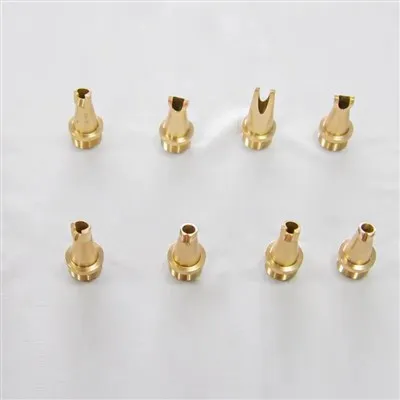
Hey there! As a supplier of Laser Welding Nozzles, I've seen a lot when it comes to the wear-and-tear characteristics of these essential tools. In this blog, I'm gonna share some insights that I've gathered over the years in the industry.
First off, let's talk about what laser welding nozzles are. Laser welding nozzles are crucial components in laser welding machines. They direct the laser beam and the shielding gas to the welding area, ensuring a clean and efficient weld. You can check out our range of Laser Welding Nozzles on our website.
Now, onto the wear-and-tear characteristics. One of the most common issues with laser welding nozzles is physical damage. During the welding process, the nozzle can come into contact with the workpiece or other objects in the vicinity. This can cause dents, scratches, or even breakage. Physical damage can affect the alignment of the laser beam and the flow of the shielding gas, leading to poor weld quality. For example, a dent in the nozzle can disrupt the smooth flow of the gas, resulting in porosity in the weld.
Another wear-and-tear characteristic is thermal stress. Laser welding generates a significant amount of heat, and the nozzle has to withstand this high temperature. Over time, the repeated heating and cooling cycles can cause the material of the nozzle to expand and contract. This can lead to cracks and deformation. The thermal stress can also affect the internal structure of the nozzle, reducing its strength and durability. For instance, if the nozzle is made of a metal with a high coefficient of thermal expansion, it is more prone to cracking under thermal stress.
Contamination is also a major factor that contributes to the wear and tear of laser welding nozzles. During the welding process, spatter, fumes, and other debris can accumulate on the nozzle. This contamination can block the gas flow channels and the laser beam path. It can also cause corrosion of the nozzle material, especially if the contaminants are chemically reactive. For example, if the welding is done in a humid environment, the moisture can react with the spatter and form corrosive substances that damage the nozzle.
The quality of the shielding gas used can also impact the wear-and-tear of the nozzle. If the gas contains impurities or has an incorrect flow rate, it can cause uneven wear on the nozzle. For example, a high flow rate of gas can cause excessive erosion of the nozzle material, while a low flow rate can lead to insufficient protection of the weld area, resulting in more spatter and contamination.


The type of material being welded is another important consideration. Different materials have different melting points, hardness, and chemical properties. Welding hard or abrasive materials can cause more wear on the nozzle compared to softer materials. For example, welding stainless steel or titanium can be more demanding on the nozzle than welding aluminum.
Now, let's talk about how to detect and prevent wear and tear. Regular inspection is key. You should visually inspect the nozzle before and after each welding job. Look for signs of physical damage, such as dents, scratches, or cracks. Check the gas flow to make sure it is smooth and consistent. You can also use a microscope or other inspection tools to detect any internal damage or contamination.
Proper maintenance is also essential. Clean the nozzle regularly to remove any spatter, fumes, or debris. You can use a cleaning solution and a soft brush to gently clean the nozzle. Make sure to dry the nozzle thoroughly before using it again. Replace the nozzle if it shows significant signs of wear or damage.
Using high-quality shielding gas and ensuring the correct gas flow rate can also help reduce wear and tear. Make sure to use gas that is free of impurities and has the right flow rate for the welding job.
In addition to laser welding nozzles, we also offer Laser Protective Lens and Laser Cutting Nozzles. These are also important components in laser processing machines, and they have their own wear-and-tear characteristics. The protective lens can get scratched or contaminated, which can affect the quality of the laser beam. The cutting nozzles can experience similar issues as the welding nozzles, such as physical damage, thermal stress, and contamination.
If you're in the market for laser welding nozzles or other laser consumables, we'd love to hear from you. Whether you're a small workshop or a large manufacturing plant, we can provide you with high-quality products at competitive prices. We have a team of experts who can help you choose the right products for your specific needs. So, don't hesitate to reach out to us for more information or to start a purchase negotiation.
In conclusion, understanding the wear-and-tear characteristics of laser welding nozzles is crucial for ensuring high-quality welds and prolonging the lifespan of the nozzles. By being aware of the factors that cause wear and tear and taking appropriate preventive measures, you can save time and money in the long run. And if you need any help with your laser welding needs, we're here to support you.
References:
- Smith, J. (2020). Laser Welding Technology. New York: Wiley.
- Brown, A. (2019). Handbook of Laser Consumables. London: Elsevier.